
Which robotic mower to choose?
The choice of a robotic mower depends not only on the lawn’s size, but also on the terrain, slopes, mowing zones, navigation type and the expected level of automation. Below we answer the most frequently asked questions: How does a robotic mower work? What should you pay attention to before buying? What determines a robotic mower’s price? When is it worth considering a model without a boundary wire, with GPS / RTK and better traction?
Estimate your lawn's area
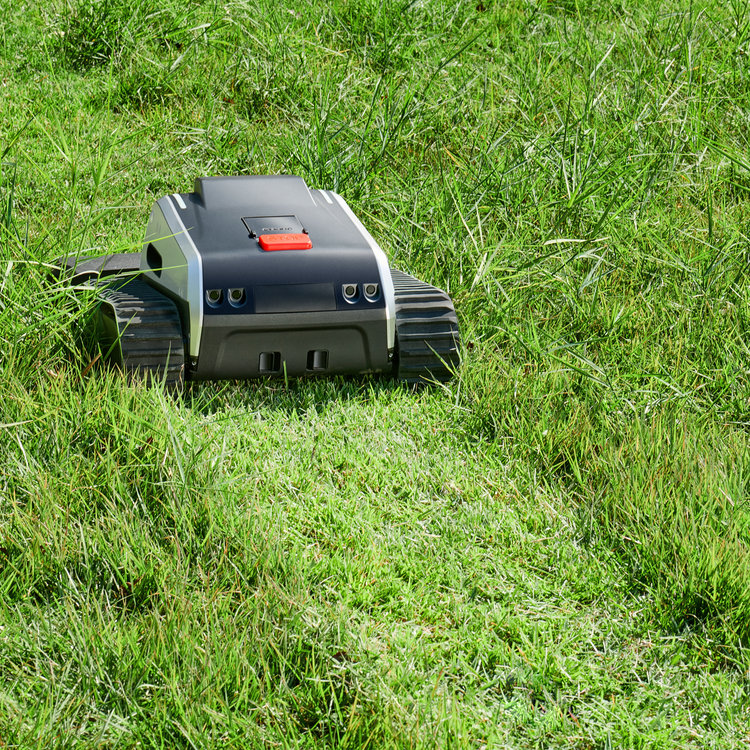
Which robotic mower should you choose for up to 1000 m²? And which one works better for 1500 m²? The answer doesn’t depend only on the maximum area declared by the manufacturer. It’s also worth considering the number of mowing zones, the device’s work performance, the ability to automatically return to the station, and the resume-mowing function after the battery is charged.
Assess the terrain
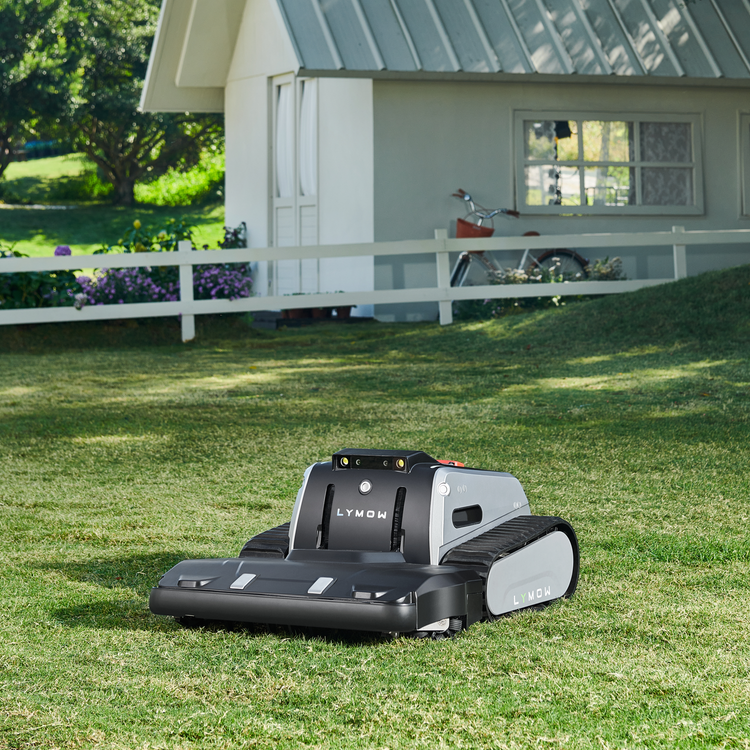
On a flat lawn, a simpler model is often enough. But if the property is uneven, has slopes or softer ground, traction and stability become more important. In that case, it’s worth considering not only which robotic mower to choose, but also whether it will cope with the conditions on your property.
Decide whether you need a boundary wire
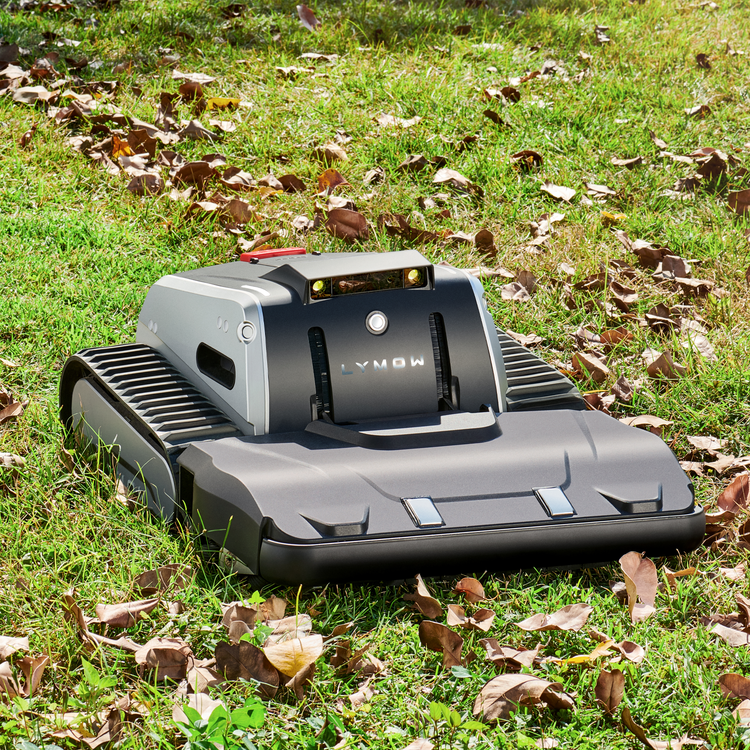
If you don’t want to lay a physical boundary wire around the lawn, it’s worth considering a model equipped with virtual boundaries and precise navigation. The question of which robotic mower without a boundary wire to choose is especially important for properties with an unusual shape, divided into several zones, or whose layout may change in the future.
Pay attention to the mowing system
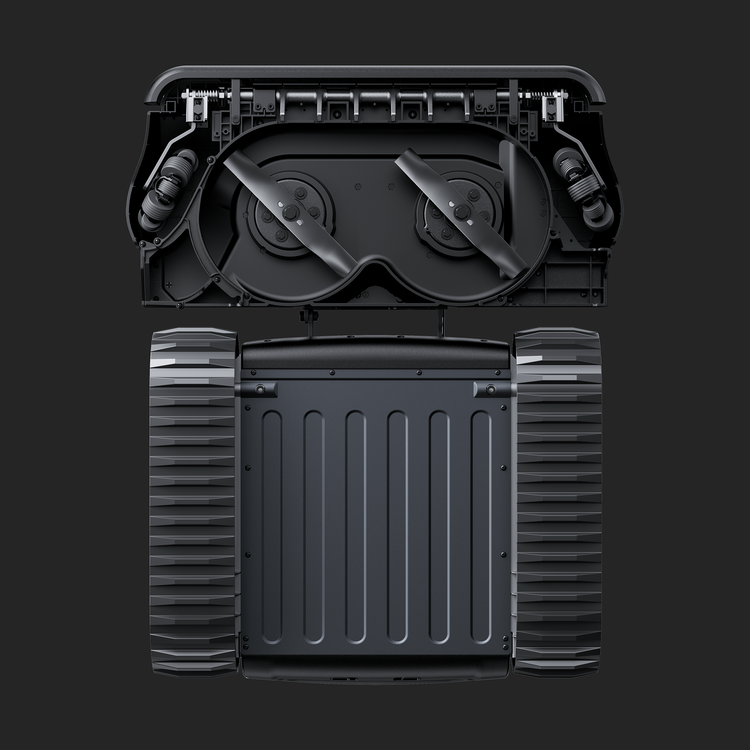
Not all robotic mowers work the same way. That’s why it’s worth paying attention to the type of blades, mowing performance, how the grass is shredded and what happens to the cut grass. If the lawn is dense, tall or covers a large area, the mowing system becomes just as important as the way the robot moves.
Don't rely on price alone
A robotic mower’s price depends on many factors, such as the navigation system, battery, drive type, work performance, mowing system or service options. That’s why, before buying, it’s worth checking whether the offered features actually match the needs of your property and your expectations for long-term lawn care.
Choosing based on your property
Which robotic mower should you choose for up to 1000 m²?
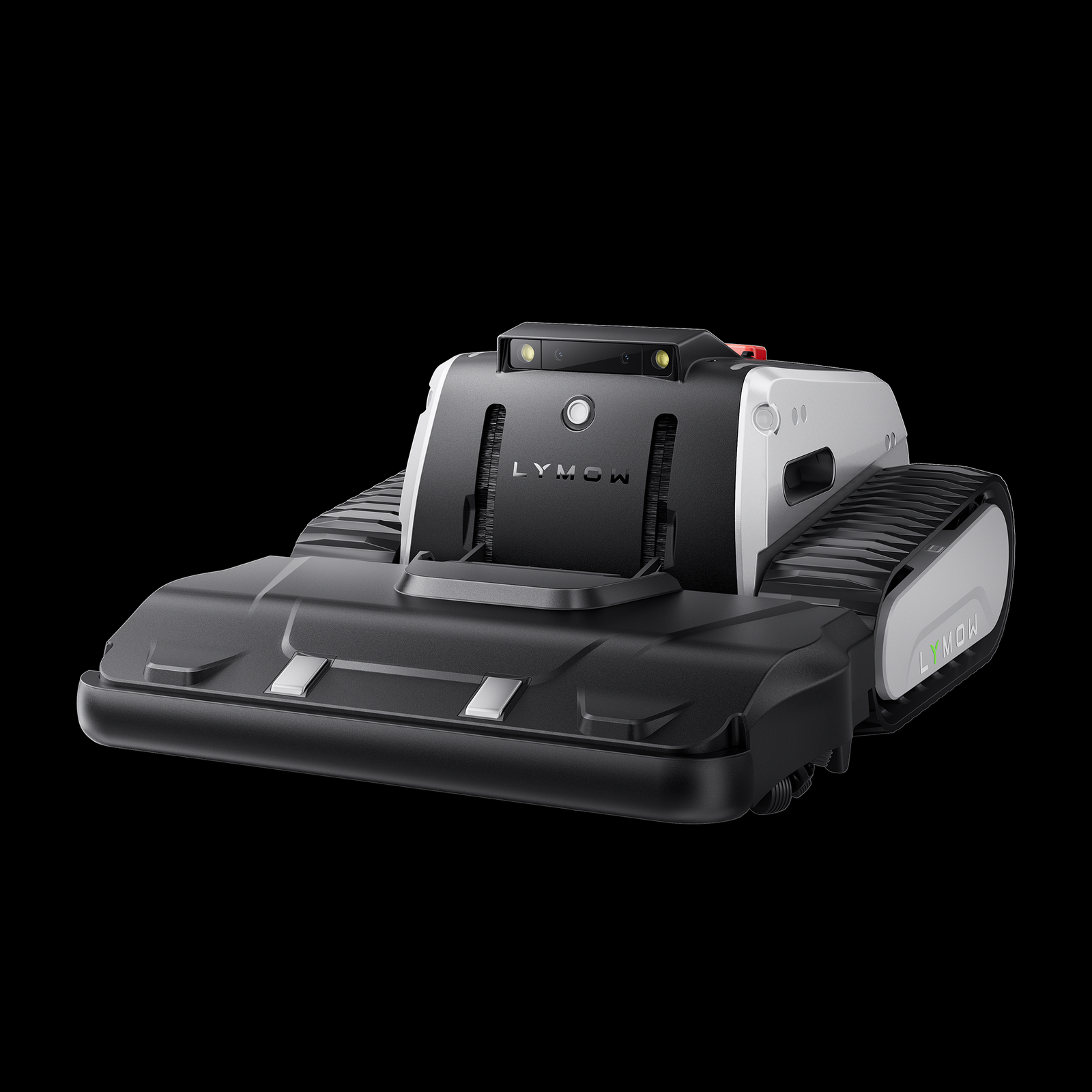
Which robotic mower to choose for up to 1000 m² depends on the nature of the property – whether it’s simple or more demanding. If the lawn is flat, uniform and free of slopes, a simpler model is often enough in many cases. But if, even on such an area, there are bumps, steeper spots, several mowing zones, or you want a solution without a boundary wire, it’s worth choosing a more advanced robot, such as Lymow One Plus.
Which robotic mower without a wire is a good choice for up to 1000 m²?
A good choice is a robotic mower for up to 1000 m² without a wire that offers precise navigation, the ability to set virtual boundaries and convenient zone management in the app. Without these features, the device may struggle to accurately determine its work area. Lymow One Plus meets these requirements thanks to GPS / RTK navigation, operation without a physical boundary wire and the ability to easily set mowing zones in the app.
Which robotic mower should you choose for 1500 m² or 2000 m²?
When choosing a robotic mower for 1500 m² or up to 2000 m², it’s worth paying particular attention to work performance, battery capacity, charging time and the ability to resume mowing from where the device left off. The larger the area, the more important automation becomes, but also consistent and stable operation. Lymow One Plus can mow up to 7,000 m² per day, making it suitable for larger properties requiring fast and effective care.
Is a robotic mower suitable for a large property?
Yes, a robotic mower can be a good solution for large properties too, provided its performance, navigation system and zone management are suited to the scale of the terrain. On larger properties, it’s important that the robot can work across multiple zones, return to the charging station on its own, and resume work after charging. Lymow One Plus meets these requirements, allowing management of up to 80 zones and operation on properties up to 1 ha.
Robotic mower – what to look out for before buying?
Before buying a robotic mower, it’s worth analyzing several key factors: the property’s area, terrain, slopes, number of mowing zones, navigation system, mowing method, and whether a boundary wire is required. Maintenance, battery capacity, service availability and long-term use of the device also matter. If the property is larger, uneven, or you want greater independence for the robot’s work, it’s worth considering Lymow One Plus as a solution for more demanding lawn care.
Before buying, it’s also worth checking delivery terms, warranty length and the availability of technical support. For Lymow, deliveries within Poland are made from a European warehouse, and delivery usually takes 2–3 business days.
Working without a boundary wire
Does a robotic mower work without a boundary wire?
Yes, a robotic mower can work without a physical boundary wire if it uses virtual boundaries and a precise navigation system. In that case, the work area isn’t defined by a cable laid around the property, but through settings in the app. Lymow One Plus works exactly this way – it uses GPS / RTK navigation and allows the creation of virtual mowing zones.
Can a robotic mower manage without a boundary wire?
Yes, provided it has a sufficiently precise positioning system and can accurately recognize the set work boundaries. With simpler wireless models, accuracy may be limited, which is why the technology used is crucial. Lymow One Plus performs well in such conditions because, as a GPS robotic mower without a boundary wire, it uses virtual boundaries and GPS / RTK navigation, ensuring precise movement around the property.
Which robotic mower without a boundary wire should you choose?
The choice of a robotic mower without a boundary wire depends on how complex the property is. If the lawn has several zones, paths, flower beds, trees or an unusual shape, it’s worth choosing a model that offers precise navigation, terrain mapping and convenient zone management in the app. Lymow One Plus is a good choice for those who want to skip laying a cable while still expecting accurate and stable performance.
Do robotic mowers have GPS?
Not all robotic mowers are equipped with GPS, so it’s worth checking the navigation system used before buying. GPS / RTK technology allows for more accurate positioning of the robot, creating a map of the lawn and working without a physical boundary wire. Lymow One Plus uses this technology, providing more precise and intelligent movement around the property.
Can a robotic mower plan a route?
Yes, an advanced robotic mower can plan its work route instead of moving randomly. This matters especially for larger or more complex properties, where planned movement allows the whole area to be covered evenly and reduces missed patches of lawn.
Does a robotic mower map the terrain?
Yes, a robotic mower can create a map of the terrain if it’s equipped with the right navigation system and software. The map created allows virtual boundaries to be set, mowing zones to be defined, and better control over the device’s work area.
Terrain, slopes and traversability
Can a robotic mower handle a slope?
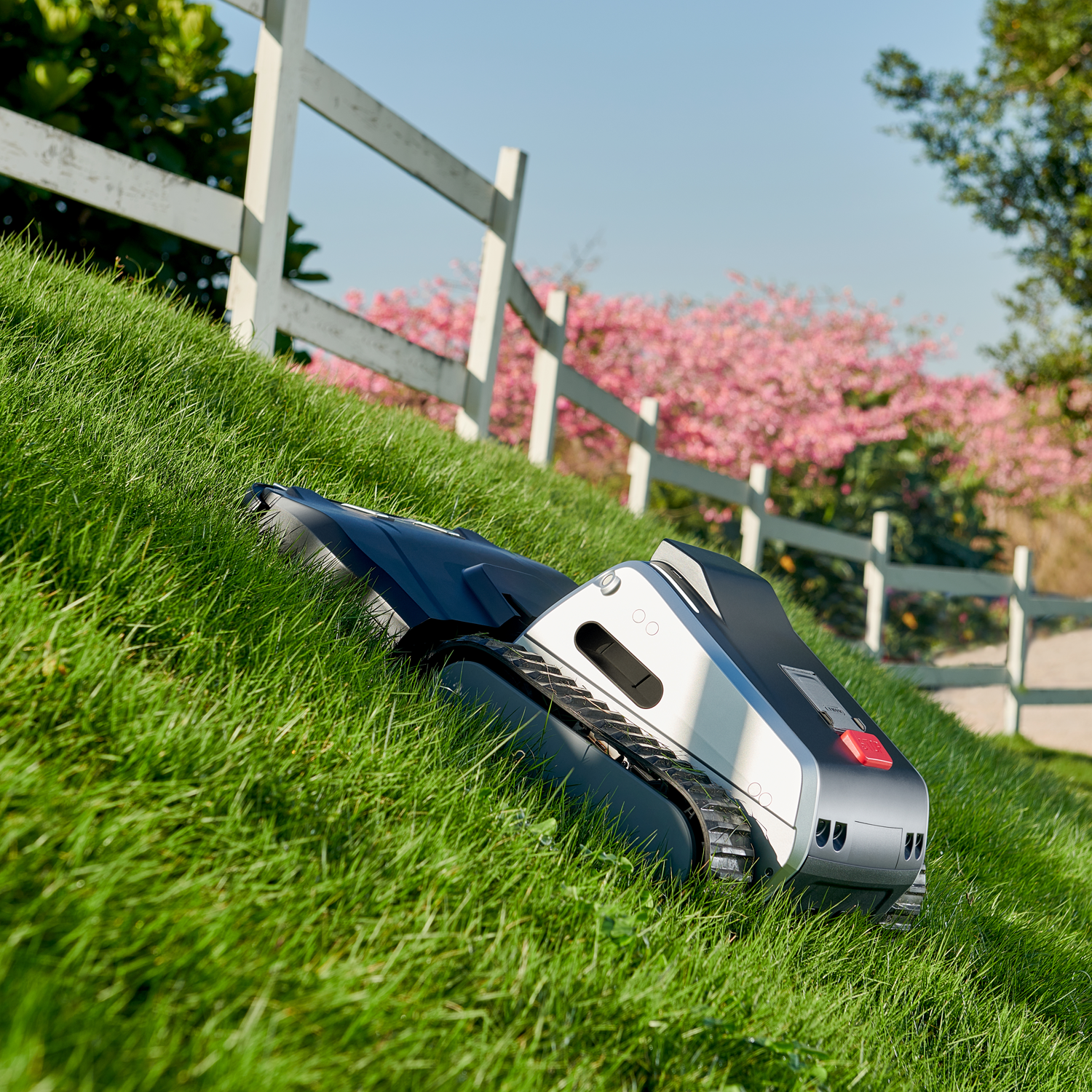
Yes, a robotic mower can work on a slope, though this depends largely on the specific model, drive type, traction and the slope’s incline. Standard wheeled models can slip or lose stability on steep or wet areas, which is why robots with a track drive perform better in such situations. Lymow One Plus stands out with this type of solution and can work on slopes with an incline of up to 45° / 100%.
Is a robotic mower suitable for embankments?
Yes, though not every model will handle steep embankments equally well. In such places, what matters is not just engine power, but above all traction, stability, and the ability to safely change direction without risk of sliding. That’s why, for properties with steeper embankments, it’s worth choosing robots with better traversal, a low center of gravity, or a track drive.
Can a robotic mower handle uneven terrain?
A robotic mower can work on uneven terrain, as long as the unevenness isn’t too great and the robot itself has sufficient stability and traction. Problems usually arise in areas with dips, steep transitions, soft ground or wet grass. In such conditions, a robotic mower for uneven terrain, whose chassis and mowing system are adapted to tougher working conditions, performs better.
Does a robotic mower need flat terrain?
No, a robotic mower doesn’t have to work only on a perfectly flat property. However, the more varied the terrain, the more important it is to choose a model suited to such conditions. For hills, embankments, dips or surfaces of varying firmness, pay attention to traversability, drive type, and the construction of the cutting unit, which should adapt better to the surface.
Which robotic mower should you choose for uneven terrain?
Choosing a robotic mower for uneven terrain is best based on three parameters: maximum allowable incline, level of traction, and driving stability. If the property includes embankments, hills or wetter areas, a standard wheeled model may not be sufficient. In such cases, it’s worth considering solutions with a track drive, a chassis adapted to uneven terrain, and better weight distribution – here Lymow One Plus is one of the suitable choices.
Mowing, blades and mulching
How does a robotic mower work?
A robotic mower operates according to the set schedule, defined mowing zones and the navigation system used. Depending on the model, it may move along a random path or plan an optimized route, return to the charging station on its own, and resume mowing after the battery is charged. More advanced models, such as Lymow One Plus, use virtual zones and intelligent route planning, making them better suited to larger or more demanding properties.
Robotic mower – what grass height is appropriate?
A robotic mower works most effectively when the lawn is mowed regularly and not allowed to overgrow excessively. The optimal grass height depends on the device model, the mowing system used, and the manufacturer’s recommendations.
For a regularly maintained lawn, a height of around 50–70 mm is usually recommended. During periods of high temperatures and drought, it’s worth leaving the grass a little taller, as it retains soil moisture better. If the lawn is too tall, the first mow should be done with a higher blade setting, gradually lowering the mowing height over subsequent cycles. On the Lymow One Plus, the mowing height can be adjusted from 30 to 100 mm, allowing the robot’s work to be adapted to both a regularly maintained lawn and taller grass. Regardless of the model, however, it’s recommended not to remove more than about one third of the blade height in a single mow.
If the grass is very tall or there are remnants from the previous season on the property, it’s worth preparing the terrain beforehand. Grass that is too tall or matted can make mowing more difficult and increase the load on the cutting system.
What does a robotic mower do with the grass?
Most robotic mowers finely shred the cut grass and leave it on the lawn as natural mulch. These clippings gradually decompose, returning some nutrients to the soil and eliminating the need to collect them. Lymow One Plus uses a slightly different solution. Thanks to a side-discharge system and a strong airflow, the cut grass is evenly distributed across the lawn’s surface. This helps it cope more effectively with denser or faster-growing grass, while still retaining the benefits of natural mulching.
How often does a robotic mower mow?
A robotic mower works according to the schedule set by the user. Using the app or control panel, you can choose specific days, times and mowing zones, so the device operates exactly when needed. Mowing frequency mainly depends on the season and the grass’s growth rate. In spring and early summer, when grass grows most intensively, mowing 5–7 days a week is usually recommended. In warmer or drier periods, frequency can be reduced to 2–4 days a week. The schedule should also be adapted to weather conditions. Mowing isn’t recommended during heavy rainfall or when the lawn is very wet, as this can negatively affect mowing quality and the device’s operation.
What’s the difference between a more powerful mowing system and ordinary grass trimming?
A more efficient mowing system matters especially when the lawn is dense, tall, wet, or located on a more demanding property. In such conditions, what counts isn’t just the type of blades, but also their rotational speed, engine power and how the grass is prepared for cutting. Lymow One Plus is equipped with dual rotary blades made of SK5 steel, operating at speeds of up to 6,000 rpm. In addition, cyclonic airflow helps lift the blades of grass before cutting, resulting in a more even and aesthetically pleasing result.
Safety, obstacles and control
Does a robotic mower avoid obstacles?
Yes, more advanced robotic mowers can detect and avoid obstacles, though effectiveness depends on the sensors and software used. Lymow One Plus uses AI Vision technology and ultrasonic sensors that help recognize, in real time, animals, people, toys, garden equipment and other objects in the robot’s path. Before starting mowing, however, it’s worth removing small or easily damaged items. This ensures smoother operation of the device and increases safety for both the robot and its surroundings.
Is a robotic mower safe for pets and children?
A robotic mower can be safe for everyday use if it’s used according to the manufacturer’s recommendations and operates in a properly prepared environment. Small children and pets should not be left unsupervised near a working device. Lymow One Plus’s obstacle detection system helps recognize animals and other objects in real time. Still, the safest approach is to schedule mowing when the garden isn’t being actively used.
Can a robotic mower work across several zones?
Yes, though the ability to handle multiple zones depends on the specific device model. Not all robotic mowers offer this – some are designed to work on only one lawn area. Mowing zones let you divide a property into separate areas, such as the front lawn, a garden behind the building, the area around the property, or terrain located in different parts of it. Each zone can have its own work parameters and mowing schedule. Lymow One Plus lets you manage up to 80 individual zones, each with its own settings, making it well suited to properties with a more complex layout.
Can a robotic mower be controlled via an app?
Yes, most modern robotic mowers can be managed via a mobile app. This is usually where you set mowing zones, work schedules, boundaries, mowing modes and other practical operating parameters. Lymow One Plus also offers app-based control, making it convenient to plan mowing and adjust the robot’s work to the layout and needs of a specific property.
Price, warranty, service and maintenance
Robotic mower price – what does it depend on?
A robotic mower’s price mainly depends on its technical capabilities and level of sophistication. A higher price is usually justified by features such as precise navigation, operation without a physical boundary wire, a more efficient mowing system, better traction, higher work performance, a larger battery, or extended app-based control functions. So if your property is large, has embankments, several mowing zones or a more complex layout, these features often matter more than the price of the device itself.
Is it worth buying a robotic mower?
Yes, a robotic mower can be a good solution for those who want to keep their lawn in good condition while reducing the time spent maintaining it. The benefits are especially noticeable on larger properties, where regular mowing takes considerable time and effort. However, a robot also works well on smaller lawns if you value automatic and systematic care.
What are the disadvantages of a robotic mower?
The main disadvantages of a robotic mower depend on the model and the conditions on the property. Some devices require installing a boundary wire, others handle embankments or uneven terrain less well. Cheaper models may offer less advanced navigation, lower work performance, or a simpler mowing system. Regular maintenance should also be kept in mind. Blades gradually wear out and need replacing, and grass residue can accumulate on the cutting assembly. Lack of regular cleaning can reduce mowing effectiveness. Greater strain on components occurs especially when the robot works in tough conditions, such as dense, wet or fast-growing grass, uneven terrain or steep slopes. That’s why it’s worth regularly checking the condition of the cutting system and keeping the device clean. Problems can also occur when the robot is used contrary to the manufacturer’s recommendations, for example during heavy rain, on a very wet lawn, on unprepared terrain, with grass blades that are too tall, or where old, uncleared grass from the previous season remains. In such situations, safety systems may temporarily pause the device’s operation, and mowing itself may be less effective.
How much power does a robotic mower use?
A robotic mower’s energy consumption depends on many factors, including the lawn’s area, mowing frequency, terrain, grass height, battery capacity and the season. For example, Lymow One Plus is equipped with a 36V 15Ah battery with a capacity of 528 Wh, which means a full charge requires about 0.53 kWh of electricity.
How do you take care of a robotic mower?
Basic maintenance of a robotic mower includes regularly cleaning the underside of the housing and the cutting system, checking the condition of the blades and replacing them when necessary. It’s also worth regularly cleaning the charging contacts and removing accumulated grass, soil and mud, especially after working in wet conditions. Regular maintenance helps maintain high mowing effectiveness and can extend the device’s lifespan.
What’s the warranty and service like for Lymow One Plus in Poland?
Lymow One Plus is covered by a standard 24-month warranty in Poland. For questions about usage, technical issues, or the need for service, please contact Polish customer support, who will provide information on the next steps and available support options.
Agrimow Sp. z o.o.
- Agrimow Sp. z o.o.
- PL. POWSTAŃCÓW ŚLĄSKICH 1/114 52-329 WROCŁAW
- Tel. +370 663 57440
- NIP 899-306-14-35
- Bank accounts:
- 89 1090 2516 0000 0001 6723 4281 (PLN)
- 13 1090 2516 0000 0001 6723 9917 (EUR)
- Erste Bank Polska S.A.
- Warsaw, Plac Europejski 3A, 00-844
- KRS number 0000008723
- NIP 896-000-56-73
- REGON 930041341
Agrimow Sp. z o.o.
- Agrimow Sp. z o.o.
- PL. POWSTAŃCÓW ŚLĄSKICH 1/114 52-329 WROCŁAW
- Tel. +370 663 57440
- NIP 899-306-14-35
- Bank accounts:
- 89 1090 2516 0000 0001 6723 4281 (PLN)
- 13 1090 2516 0000 0001 6723 9917 (EUR)
- Erste Bank Polska S.A.
- Warsaw, Plac Europejski 3A, 00-844
- KRS number 0000008723
- NIP 896-000-56-73
- REGON 930041341


